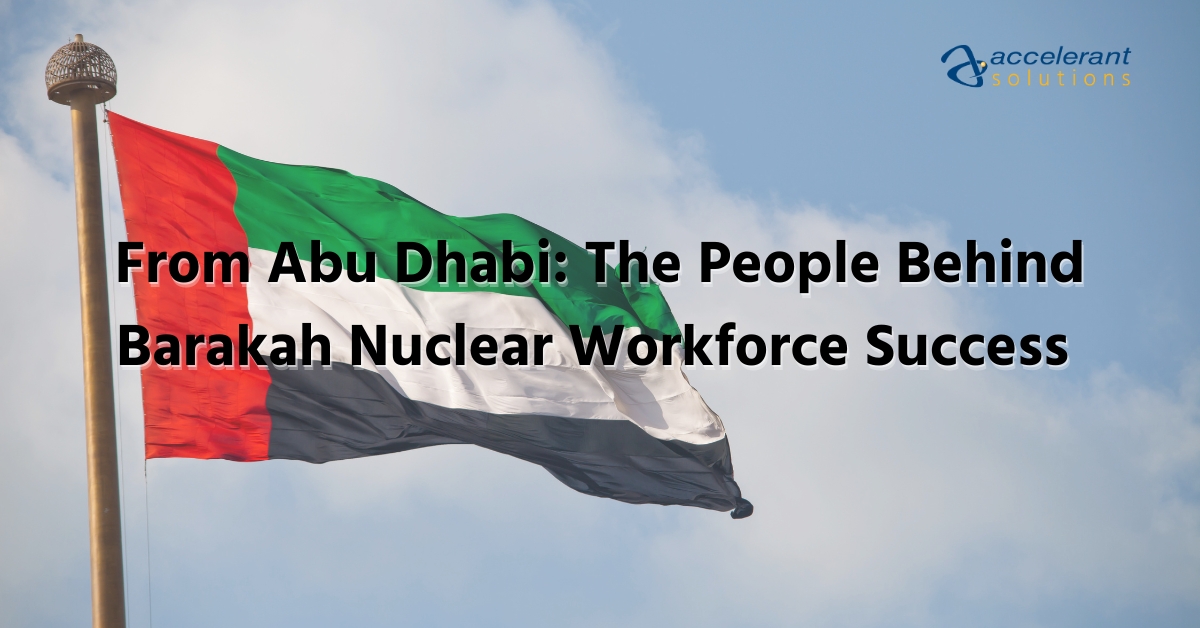
From Abu Dhabi: The People Behind Barakah Nuclear Workforce Success
I live and work in Abu Dhabi. So, when people ask me what energy security looks like in practice, I don’t have to look far.
Across the UAE right now, there is a collective focus on stability in business, infrastructure, and daily life. And sitting at the center of that stability without interruption is the Barakah Nuclear Power Plant. Run by the Emirates Nuclear Energy Corporation (ENEC), Barakah supplies around 25% of the UAE’s electricity. Round-the-clock. Clean. Dependable. Even now. The Barakah nuclear workforce is the reason that reliability exists.
That is not a small thing. And from where I sit, it is deeply worth talking about.
The Nuclear Workforce Supporting the Grid
It is easy to talk about nuclear energy in megawatts and emissions figures. Those numbers matter. Barakah has reduced the UAE’s reliance on LNG imports by more than $9 billion and helps avoid over twenty-two million tons of carbon emissions every year. It powers the steel, aluminum, and manufacturing industries driving Abu Dhabi’s non-oil economy.
But what I think about more is this: behind every one of those numbers is a person who showed up, stayed focused, and kept something critical running. The Barakah nuclear workforce is the human engine behind those numbers.
The engineers, technicians, and operators and Barakah have sustained a national asset through a period of significant regional pressure. That is not only a technical achievement. It is a workforce achievement. One the nuclear industry globally does not talk about enough.
ENEC built something worth being proud of. Not just the plant. The people.
The Gap the Rest of the World Is Still Facing
Globally, the nuclear industry is expanding faster than it can staff itself. Around 15 reactors are expected to come online in 2026 alone, and the workforce gap is projected to reach 2.7 million by 2050 – including over 220,000 QA and compliance specialists and 550,000 construction trades professionals. More than 50 countries are simultaneously building regulatory capacity from scratch. The demand is not coming. It is already here.
The pipeline itself is the problem. Nuclear welding certifications take two to four years. NDE certifications require over 1,600 hours of training. Yet, 53% of nuclear hiring managers globally identify engineering and technical operations as the hardest roles to fill. Institutional knowledge is leaving faster than it can be transferred.
The grid can only hold if the people behind it are ready. Additionally, readiness has to be built long before pressure tests it.
Accelerant Solutions Has Been Part of This Story Since the Beginning
What makes this impactful for me is that I work for the company that helped lay some of the foundation at Barakah over a decade ago.
When ENEC set out to stand up Barakah, they were doing something no Arab nation had done before. The operational scale of that undertaking (technical, linguistic, procedural) was significant, and ENEC made a deliberate choice to invest in getting it right from the start. Accelerant Solutions was among the partners brought in during those early years, beginning in 2014. Supporting the Barakah nuclear workforce has been central to our mission there.
That work included converting and technically rewriting Barakah’s operating procedures from Korean into English, making them functional and fit for use by the plant’s crews. Accelerant Solutions also supported the establishment of work planning processes and functional equivalency groups, mentored operating crews and shift managers through simulator sessions, developed model work orders in SAP, and completed assessments including INPO-style review of their maintenance and technical training programs.
ENEC’s leadership chose to invest in their workforce from the very beginning. That decision is why the grid held. Watching Barakah sustain the UAE’s power supply through one of the most demanding periods in the region’s recent history – I know some of what that investment looked like in its earliest form. And it is something to witness.
Progress Does Not Pause – And Neither Do the People Behind It.
Barakah is a success story for the UAE’s grid, for ENEC, and for what the nuclear industry can achieve when an organization commits to its people from day one and never stops. What ENEC built is not just a plant. It is a culture of workforce investment that is sustaining a nation’s energy supply in real time. That is worth recognizing.
To every nuclear program watching: this is what it takes. The challenges do not stop at startup. They evolve. Crews need continued mentoring. Programs need assessing. Knowledge needs to be protected and passed on. Accelerant Solutions has spent decades supporting that ongoing work alongside programs across North America and internationally – and we are here for all of it.
Accelerating the nuclear industry has always been our mission. Barakah is one proof point of what sustained commitment looks like. We are proud to have played even a small part of that story.